" " indicates required fields
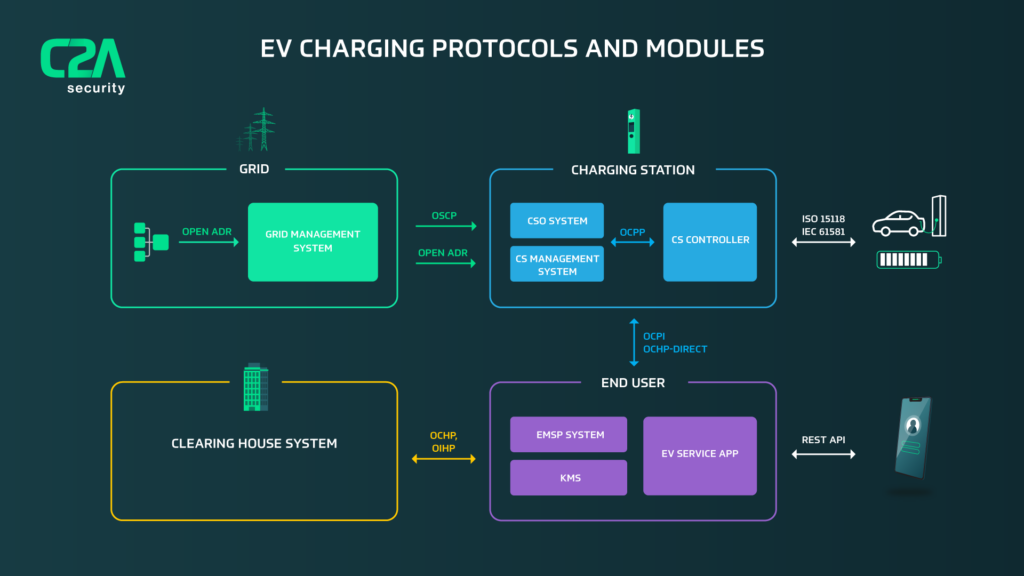
As the adoption of electric vehicles continues to grow, so do the concerns about the security of electric vehicle (EV) charging infrastructure. Cyber threats targeting EV charging systems are becoming increasingly sophisticated, posing a significant risk to both the safety of individuals and the stability of the energy grid. In addition, regulations surrounding EV charging are quickly evolving, with governments and industry bodies introducing new standards and requirements to ensure that charging infrastructure is resilient and secure.
In this blog post, we’ll explore the current state of cyber threats to EV charging systems, as well as the latest regulations and standards designed to protect this critical infrastructure.
It’s no secret that as more and more people switch to electric vehicles, the EV charging infrastructure is becoming a bigger target for cybercriminals, who are constantly looking for ways to exploit vulnerabilities, and unfortunately, there are quite a few vulnerabilities to exploit.
For example, cybercriminals can skim credit card information from EV charging stations, just like they can at conventional gas pumps or ATMs. That’s just the beginning – potential hackers can use cloud servers to hijack entire electric vehicle charger networks, causing massive amounts of damage and disruption.
Some of the main cyber threats to EV charging infrastructure include:
The potential consequences of cyber threats to electric vehicle charging infrastructure are significant and far-reaching:
As the importance of electric vehicle (EV) charging infrastructure grows, governments and industry organizations around the world are taking steps to ensure that charging stations are secure and reliable.

The UK is the 1st country to mandate EV charging regulations (The Electric Vehicles Smart Charge Points Regulations 2021), which went into effect in June 2022, as part of an overhaul of the country’s Building Regulations. The regulations ensure that charge points meet certain device-level requirements, enabling a minimum level of access, security, and information for consumers. On the security aspect, a charge point must be designed, manufactured, and configured to provide appropriate protection:
The National Institute of Standards and Technology (NIST) in the United States has developed a framework for improving critical infrastructure cybersecurity that includes guidelines for securing EV charging infrastructure. The European Union Agency for Cybersecurity (ENISA) has also published guidelines for securing EV charging infrastructure, focusing on areas such as access control, data protection, and incident response.
While these regulations and standards are necessary to ensure the safety and reliability of these systems, they create both opportunities and challenges for companies manufacturing EV charging equipment:
C2A Security’s DevSecOps platform is a fully automated TARA solution that empowers OEMs to address the challenges of merging security, compliance, and product innovation.
Interested in hearing more? Leave your details to schedule a demo with me.



Dynamic threat modeling and risk assessment aligned with global regulations
LLM-agnostic generative AI layer powering automation across every module
Aggregated threat feed contextualized against your actual products
Generate, manage, and triage all BOMs and vulnerabilities across the lifecycle
Quantitative optimization of mitigation strategy and security control allocation
Configurable dashboards and reports across every EVSec data layer
Extract software composition and risk from firmware and binaries without source code
Optimized anomaly detection for Ethernet and CAN, plus ECU runtime protection
Quantify and manage cybersecurity risk for products operating in the field
Enrich SOC events with deep product and architecture context
Context-driven test and validation with intelligent fuzzing, integrated into CI/CD
AI-powered static analysis integrated into CI/CD with reduced false positives
Foundational layer: cyber model, workspaces, and integration backbone to DevOps toolchain
Out-of-the-box and customizable workflows for regulatory and security processes
Centralized compliance management with evidence generated from live data