" " indicates required fields

By Gilad Bandel, VP of Cybersecurity
The Common Vulnerability Scoring System (CVSS) has long been the industry standard for assessing the severity of cybersecurity vulnerabilities. It provides a quantitative measure based on factors like attack vector, complexity, impact, and exploitability. These factors generate a severity score from 0.0 to 10.0, which organizations use to prioritize vulnerability management and mitigation efforts.
However, while CVSS effectively categorizes vulnerabilities, it is not a measure of risk and has limitations in addressing the unique challenges faced by industries that create complex heterogeneous systems, such as involving multiple components from various sources. One primary drawback of the CVSS framework is its generalization.
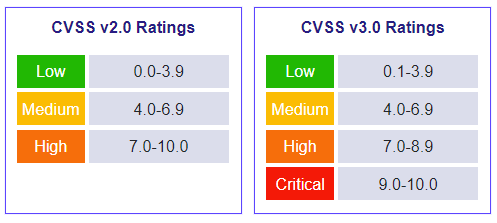
CVSS scores are designed to be universally applicable, but this universality overlooks specific operational contexts that could significantly alter a given vulnerability’s exploitability, impact, and emerging risk. For example, a vulnerability with a high CVSS score might pose a significant risk in an IT system. Still, its real-world impact and associated risk could be far less severe in a controlled automotive environment with several security mechanisms that transfer or share the risk. Sometimes, even if the vulnerability is exploitable, it might not risk the overall system risk level. Conversely, a seemingly minor vulnerability might have catastrophic consequences if exploited in a critical automotive function.
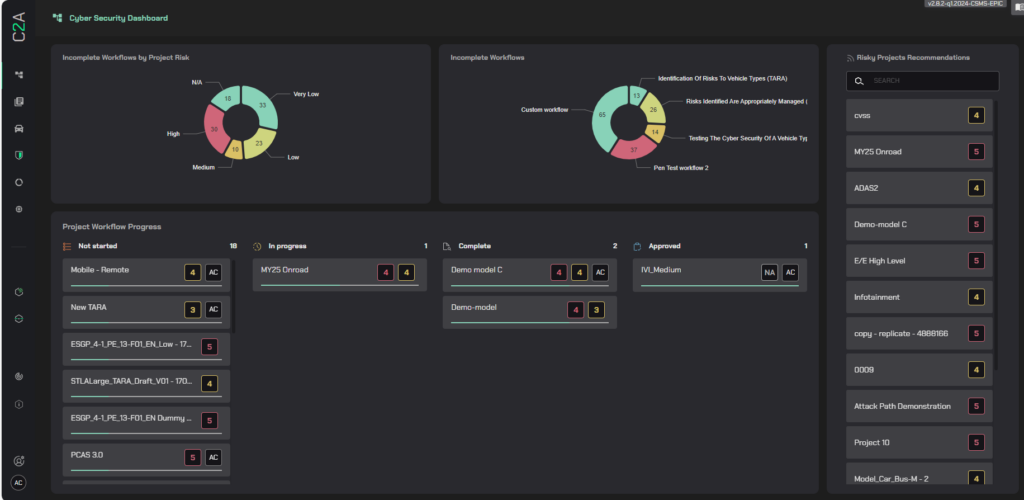
These nuances are not captured in a CVSS score alone, potentially leading to inefficient resource allocation when mitigating risks. This is where EVSec Platform’s context-driven approach to risk management shines. Instead of relying solely on generalized vulnerability scores like other tools, EVSec Platform integrates contextual factors into the risk assessment process, deriving from the proprietary Cyber Model.
EVSec Platform considers not just the technical characteristics of a vulnerability but also its relevance within the specific operational environment of the automotive system. For instance, EVSec could assess whether a vulnerability exists in a non-critical system that poses no real risk to vehicle safety versus one that impacts essential vehicle functions like braking or steering. By factoring in these operational nuances, EVSec provides a more refined understanding of which vulnerabilities pose a significant risk.
This context-aware approach to risk prioritization can lead to better decision-making for car makers, Tier-1 suppliers, and other stakeholders. Instead of spreading resources thin across all vulnerabilities, organizations can focus on addressing those with the highest potential for harm within their specific systems. Ultimately, this tailored approach adds a critical intelligence layer to traditional vulnerability management strategies.
Schedule an exclusive demo to see firsthand how EVSec Platform enhances safety and efficiency through automation and context-aware risk management, enabling companies to navigate the complex landscape of cybersecurity threats better.