" " indicates required fields
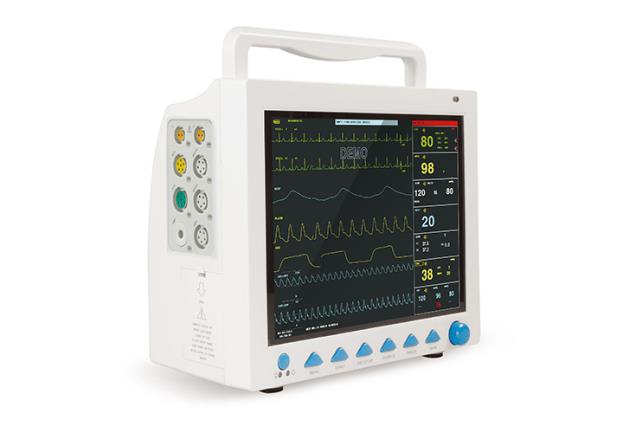
In early 2025, security researchers uncovered a critical vulnerability in the Contec CMS8000 patient monitor system – an affordable, widely deployed device in hospitals and clinics worldwide. The device was found to include a hard-coded administrative backdoor accessible via a static IP and embedded Wi-Fi AP.
This kind of vulnerability is alarming enough on its own, but its regulatory consequences under EU law are even more serious. With the updated Radio Equipment Directive (RED) cybersecurity provisions becoming mandatory from August 1, 2025, the CMS8000 is now a textbook case of non-compliance. Here’s why, and what manufacturers must do to adapt.
[Download our complimentary RED Compliance Checklist eBook]
The Vulnerability: A Quiet Threat to Patient Safety
The vulnerabilities, CVE-2025-0626 and CVE-2025-0683, enable unauthenticated remote access to the device’s core functions. An attacker within wireless range or on the same network could:
This is not just a privacy issue. Lives could be at stake if such a device is tampered with in a clinical setting.

The RED Regulation and Article 3.3: A Security Shift
The Radio Equipment Directive (2014/53/EU) traditionally governed only aspects like radio spectrum efficiency and electromagnetic compatibility. But with Delegated Regulation (EU) 2022/30, the EU expanded RED’s scope to cybersecurity, specifically through Article 3.3(d), (e), and (f).
These provisions become legally binding for CE-marked products starting August 1, 2025, and they apply to any connected radio equipment, including Wi-Fi and Bluetooth-enabled medical devices that fall outside the Medical Devices Regulation (MDR).
Here’s how the CMS8000 violates Article 3.3:
Implication: A device like the CMS8000 is not eligible for CE marking under RED. It cannot be sold legally in the EU post-August 2025 unless remediated.
What Manufacturers Must Do Now
With the compliance deadline looming, device manufacturers, especially in the IoT and healthcare space, must begin shifting security left and baking in cybersecurity by design.
Key obligations under RED Article 3.3(d)-(f):
Navigating the Regulatory Overlap: RED, MDR and CRA
Many manufacturers may assume their medical devices are already governed under the Medical Devices Regulation (MDR), and thus exempt from RED. Not necessarily.
To summarize:
Key Takeaway for Manufacturers
The Contec CMS8000 vulnerability is a wake-up call. Regulatory bodies are moving beyond passive safety to demand active cybersecurity, and the RED regulation is now one of the most direct and enforceable tools in Europe.
As of August 1, 2025, non-compliance with RED Article 3.3 means:
It’s time for medical and IoT manufacturers to stop treating cybersecurity as optional, and start building it into the very DNA of product development.
Next Steps: A Checklist for RED Compliance
Download our complimentary RED Compliance Checklist eBook (PDF)
RED Article 3.3 is no longer just legalese. It’s a cybersecurity benchmark that sets the tone for global regulation. As medical devices become smarter and more connected, the line between patient safety and software security is vanishing. For manufacturers, compliance is now an engineering challenge – not just a paperwork task.
To see how EVSec can automate your cybersecurity and compliance processes, contact C2A Security for a demonstration of the EVSec platform https://c2a-sec.com/schedule-demo/.