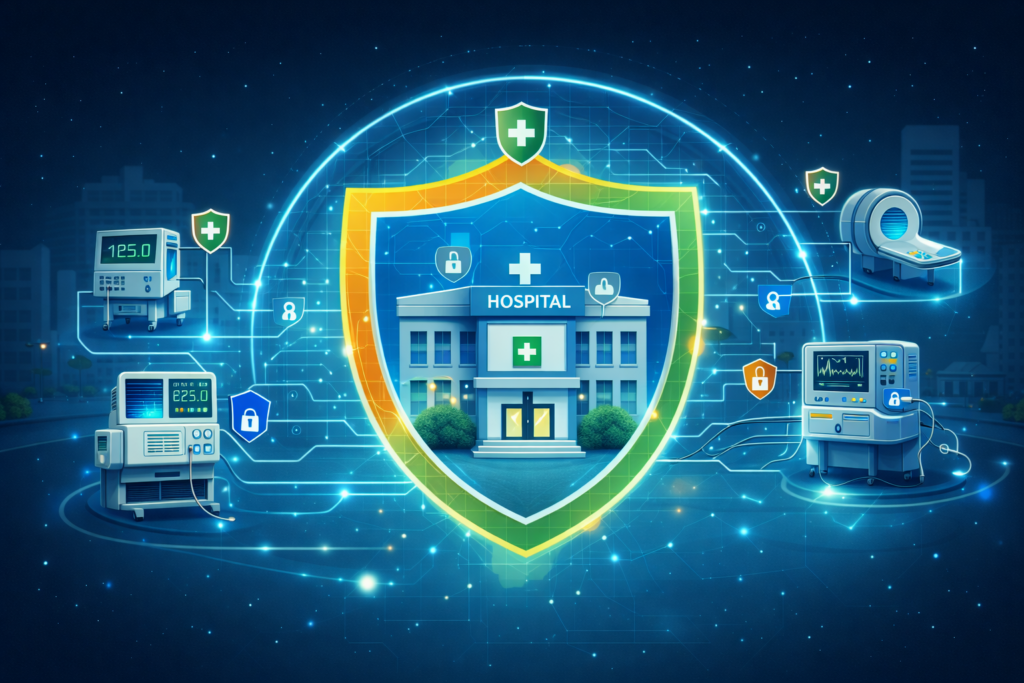
Many modern medical devices contain hundreds of software components sourced from multiple suppliers across the global software supply chain. When a vulnerability disclosure appears, hospitals are expected to determine quickly whether that vulnerability could affect patient care, clinical operations, or device safety.
Yet most healthcare delivery organizations do not design or control the software inside the devices they deploy. They inherit complex software ecosystems embedded inside medical equipment with operational lifespans measured in decades.
As cyber threats increase and regulatory expectations continue to evolve, hospitals are increasingly expected to understand and manage cyber risk associated with devices they do not fully control. Software Bills of Materials (SBOMs) are often positioned as the answer. In practice, SBOMs are an essential starting point, but on their own they are not enough.
The challenge is not the SBOM itself. The challenge is what comes next.
HDO Challenges with Device Cyber Risk
Medical device cybersecurity presents a fundamentally different problem set than traditional IT security, and hospitals face a distinct set of challenges when managing medical devices.
• Limited visibility into the software inside purchased devices
• Hundreds or thousands of device models across many manufacturers
• Long device lifecycles with constrained patching windows
• Fragmented ownership across Biomed, IT, Security, Supply Chain, and Clinical teams
As a result, device cyber risk is often managed reactively. Vulnerabilities surface through alerts, advisories, or incidents, and teams must determine whether an issue actually affects patient care or operational safety.
Without sufficient context, prioritization becomes difficult.
Security alerts accumulate. Vulnerability lists grow. Teams struggle to determine which issues actually matter for patient safety or operational continuity.
SBOMs as an Ingested Data Type
The importance of SBOMs in medical device cybersecurity has been reinforced by regulatory developments such as the FDA’s Section 524B cybersecurity requirements. These requirements require manufacturers to provide SBOMs and support vulnerability disclosure processes in order to improve transparency across the medical device software supply chain.
This transparency is valuable. However, transparency alone does not translate into operational decision making.
An SBOM is not a document to be read or a spreadsheet to be archived.
For healthcare delivery organizations, an SBOM should be treated as an ingested data type. It becomes one input into a broader device cybersecurity and risk management workflow.
When operationalized properly, SBOMs allow hospitals to:
• Understand what software components exist within devices
• Correlate vulnerabilities to actual deployed assets
• Ask more precise, informed questions of manufacturers
• Reduce uncertainty during incident response
Just as importantly, SBOMs clarify what hospitals cannot determine on their own.
An SBOM does not reveal whether a vulnerability is exploitable in a specific hospital environment, whether it affects clinical functionality, or whether it introduces patient safety risk. Those answers require combining SBOM intelligence with deployment architecture, network exposure, clinical usage, and operational constraints.
The Context Gap in Medical Device Security
SBOMs describe what software exists inside a device.
Hospitals must determine whether a vulnerability creates meaningful risk within their environment.
That requires context.
Security teams need to understand:
• Where the device is deployed within the network
• Whether the vulnerable component is reachable or exposed
• How the device is used in clinical workflows
• Whether exploitation could affect patient safety or operational continuity
• Whether mitigation options exist without disrupting care delivery
None of this context exists inside the SBOM itself.
Without deployment architecture, device configuration, clinical usage, and network exposure data, vulnerability lists remain abstract.
This is the context gap hospitals face when trying to translate software transparency into actionable cybersecurity decisions.
Real World Use Cases: Where SBOMs Actually Help
When treated as operational data, SBOMs deliver tangible value across several hospital workflows.
Risk Triage and Prioritization
SBOMs help shift triage from abstract severity scores to environment specific risk. Instead of reacting to every new CVE, hospitals can use SBOM data to identify which vulnerabilities map to deployed devices and then evaluate those findings in context.
That context includes where the device is deployed, how it is connected, what clinical function it supports, and what operational constraints limit remediation.
Incident Response and Remediation
During active incidents or vulnerability disclosures, SBOMs reduce uncertainty. Hospitals can identify affected devices and engage manufacturers with precise technical questions.
This supports faster investigation, fewer unnecessary escalations, and more coordinated response between healthcare organizations and device manufacturers.
Procurement and Pre-Purchase Risk Assessment
SBOMs allow healthcare delivery organizations to assess device cyber risk earlier in the lifecycle, before a device is purchased or deployed.
By reviewing software components, versions, known vulnerabilities, and supplier update practices, hospitals can incorporate cyber risk considerations into purchasing decisions alongside clinical and financial criteria.
This shifts conversations with manufacturers from reactive remediation to proactive risk expectations.
Bridging Biomed, IT, and Security
One of the most overlooked benefits of SBOMs is their ability to serve as a shared reference point across traditionally siloed teams.
Biomedical engineering understands device function and clinical impact.
IT understands network architecture and asset deployment.
Security understands threat activity and vulnerability behavior.
SBOM data can provide a shared reference point that helps these teams collaborate around the same technical information rather than working from disconnected tools and assumptions.
Effective device risk management requires coordination across disciplines with clear roles, shared visibility, and aligned decision making.
The Unique Constraints of Medical Device Remediation
Medical devices introduce operational constraints rarely encountered in traditional IT environments.
Hospitals cannot independently patch most devices. Software updates typically require manufacturer validation and may involve regulatory considerations related to device safety.
In many situations remediation options include:
• Manufacturer provided software updates
• Configuration adjustments
• Network segmentation
• Compensating security controls
Determining which approach is appropriate often requires collaboration between healthcare organizations and manufacturers.
SBOM intelligence can inform these conversations, but effective risk management still depends on understanding how devices operate within the clinical environment.
Moving from SBOMs to Risk Management
SBOMs are a necessary foundation, but they are not a finish line.
For healthcare delivery organizations, the objective is not SBOM compliance. The objective is the ability to continuously assess, prioritize, and manage device cyber risk in a way that supports patient safety and operational resilience.
Achieving this requires integrating multiple sources of information:
• SBOM component intelligence
• Device asset inventories
• Vulnerability intelligence feeds
• Network architecture and segmentation data
• Clinical usage and operational criticality
Effective device cybersecurity requires contextual intelligence that connects software component data, deployment architecture, and clinical usage.
Recent regulatory and policy discussions increasingly emphasize operational cybersecurity risk management in addition to transparency.
Hospitals that treat SBOMs as living data integrated into cybersecurity workflows are better positioned to move from reactive response to proactive risk management.
They are also better equipped to engage manufacturers as partners in managing shared cyber risk across the medical device ecosystem.
SBOMs alone do not solve device cybersecurity.
When combined with architecture, deployment, and clinical context, they enable hospitals to translate vulnerability intelligence into prioritized, risk based action.
How C2A Security Helps Operationalize Device Cyber Risk Management
Managing medical device cybersecurity requires more than visibility into software components. Healthcare organizations need the ability to translate SBOM transparency into operational risk decisions that reflect real deployment environments and clinical realities.
C2A Security’s EVSec platform is designed to help organizations operationalize SBOM intelligence by combining software component visibility with architecture context, vulnerability intelligence, and structured risk management workflows.
This approach enables healthcare organizations and device manufacturers to move beyond static SBOM documentation and toward continuous, evidence driven device cybersecurity management.
Learn more here about how contextual intelligence can help operationalize device cybersecurity and regulatory readiness.